
NOTE: This article includes valuable information regarding common surf injuries from Dr. Koutures, a local pediatrician and sports medicine specialist.
 Surfing is one of the most rewarding ways to stay active. It builds strength, balance, endurance, and confidence while connecting athletes with the ocean. However, like any sport, surfing carries a risk of injury. Understanding these risks and taking preventive measures can help surfers of all ages stay healthy and spend more time in the water.
Who Is Most Likely to Get Injured?
Surf injuries can happen to anyone, but certain groups are at higher risk:
• New surfers who have not yet mastered wave judgment and board control
• Experienced surfers attempting larger waves and advanced maneuvers
• Children and adolescents appear to have higher concussion rates
• Surfers participating in crowded conditions
• Athletes surfing beyond their skill level
• Individuals using alcohol or recreational drugs
The good news? Many injuries are preventable.
Understanding Rip Tides
Surfers should only enter the water at beaches where lifeguards are present. While rip currents can sometimes help surfers paddle beyond breaking waves, they can also create unpredictable and hazardous conditions. Lifeguards provide an important layer of safety and can quickly respond in the event of an emergency.
What to Do if Caught in a Rip Current
1. Stay calm and don’t panic
2. Do not swim directly against the current
3. Swim parallel to the shoreline until you are out of the current
4. Once free, swim back toward shore
5. If you cannot escape, float or tread water and signal for help
Head Injuries & Concussions
One of the most concerning surf-related injuries is concussion. These injuries often occur when surfers strike their board, the ocean floor, or another surfer. Even relatively small waves can generate significant forces when combined with rotational movement underwater. Learn more about concussions here.
Returning to Surfing After a Concussion
Returning to surfing requires more than simply waiting for symptoms to improve. A gradual progression should be supervised by a medical professional experienced in concussion recovery and may include:
1. Working on any concerns with balance and visual tracking
2. Having no post-concussion symptoms
3. Start with swimming in pool — no flip turns
4. Progressing to swimming with flip turns and underwater diving skills
5. Practicing paddling in calm water
6. Standing on the board in shallow water without waves
7. Riding small waves straight ahead
8. Gradually introducing turns, cuts, and larger waves
Surfers should not return to challenging conditions until fully symptom-free and medically cleared. Click here to learn more.
Surfboard-Related Trauma (from the Dunsborugh PhysioTherapy Center)
Many surf injuries occur from direct contact with the surfboard, including:
• Facial cuts
• Broken noses
• Dental injuries
• Rib injuries
• Fractures
• Deep lacerations
Approximately half of all surfing injuries involve lacerations, and many occur during wipeouts when surfers strike the seafloor or a board fin.
Prevention Tips
• Maintain adequate spacing from other surfers
• Avoid crowded surf breaks when possible
• Use nose and fin guards on beginner boards
• Wear a wetsuit for additional protection
• Learn proper wipeout techniques
• Keep your head protected when managing board recoil from the leash
Neck and Spine Injuries
Although less common, neck and spinal injuries can be severe. Risk increases when surfers:
• Dive headfirst into shallow water
• Surf shore-breaking waves
• Strike reefs or sandbars
• Experience forceful wipeouts
Prevention Tips
• Never dive headfirst into unknown water
• Learn to tuck under large waves properly
• Roll with your board in shallow-water situations
• Understand local conditions before entering the water
Shoulder Injuries: The “Surfer’s Shoulder”
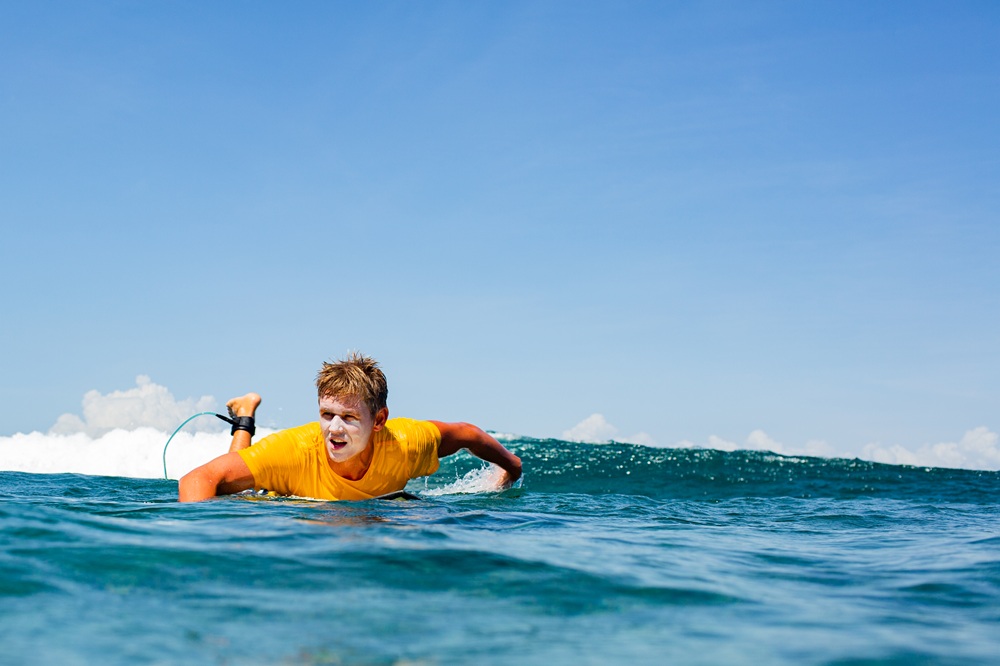
Many surfers spend nearly 80% of their session paddling. Repetitive overhead motion can lead to chronic shoulder problems.
Common Conditions
• Shoulder impingement
• Labral injuries
• Multidirectional instability
• Rotator cuff irritation
• Growth plate injuries in younger athletes
 Common Paddling Mistakes & How to Fix Them (from One Nine Physical Therapy)
Avoid dropping the elbow below the hand during the pull, as this reduces efficiency and increases shoulder stress. Entering the water thumb-first can also restrict shoulder movement. Instead, keep the elbow high, use the entire forearm to generate force, and enter the water with the fingers leading.
Paddling Mistakes
• Multidirectional instability
• Rotator cuff irritation
• Growth plate injuries in younger athletes
• Paddling Too Fast (Use long, deliberate strokes with proper technique)
• Poor Board Position (Find the board’s “sweet spot” where it rides flat with the nose slightly elevated)
Prevention Tips
• Strengthen the rotator cuff and scapular stabilizers
• Stretch the chest muscles regularly
• Improve thoracic spine mobility
• Focus on efficient paddling mechanics
• Address pain early before it becomes chronic
Click here to learn more about surfing shoulder injuries.
Knee Injuries
Surfing places significant stress on the knees during turns, cutbacks, and landings. The greatest risk is to the back leg from pushing off or kneeling to catch a wave.
Common Knee Injuries:
• Ligament injuries such as the anterior cruciate ligament (from rotational falls) and the medial collateral ligament (from push off the back leg)
• Meniscus tears
• Knee bursitis
Prevention Tips
• Maintain proper stance mechanics
• Avoid excessive twisting
• Build lower extremity strength
• Progress gradually into advanced maneuvers
Surfer’s Ear: An Often-Overlooked Problem
Repeated exposure to cold water and wind can lead to a condition called surfer’s ear (exostosis), which is abnormal bone growth within the ear canal that can trap water and debris.
Symptoms
• Recurrent swimmer’s ear
• Muffled hearing
• Ear pain
• Water trapped in the ears
Prevention Tips
• Wear surf-specific earplugs
• Use a hood or cap in colder conditions
• Dry ears thoroughly after surfing
Early prevention can significantly reduce the risk of needing surgery later in life.
 Swimmer’s Ear
Swimmer’s ear is a common infection among surfers and swimmers.
Prevention Tips
• Using physician-recommended preventive ear drops after water exposure
• Using over-the-counter drying drops
• Drying ears gently after surfing
• Avoiding aggressive ear cleaning that may damage the skin lining of the canal
Click here to learn more.
Sun Protection: Every Surfer Needs a Plan
Surfers often spend hours exposed to ultraviolet radiation reflected from both the sun and the water. Long-term sun exposure increases the risk of:
• Skin cancer
• Premature skin aging
• Sunburn
• Eye damage
Sun Safety Tips
• Apply broad-spectrum SPF 30-50 sunscreen
• Reapply every two hours and after prolonged water exposure
• Wear UV-protective rash guards
• Use polarized sunglasses when not surfing
• Seek shade during peak UV hours when possible
Final Thoughts
Surfing offers tremendous physical and mental health benefits, but injuries can occur when preparation, technique, or environmental awareness are lacking.
The best injury prevention strategies are surprisingly simple:
• Know your limits
• Respect ocean conditions
• Master proper technique
• Protect your head, ears, and skin
• Progress gradually as your skills improve
A little prevention can lead to many more healthy years enjoying the waves. Stay safe, surf smart, and have fun out there.

Chris Koutures, MD, FAAP grew up here in Irvine. He is a dual board-certified pediatric and sports medicine specialist who practices at ActiveKidMD in Anaheim Hills. He is a team physician for USA Volleyball (including participating in the 2008 Beijing Olympics); the U.S. Figure Skating Sports Medicine Network; Cal State Fullerton Intercollegiate Athletics; and the Chapman University Dance Department. He offers a comprehensive blend of general pediatric and sports medicine care with an individualized approach to each patient and family.
- Back to School Health & Safety Tips - August 18, 2026
- Body Boarding & Skim Boarding Injuries: How to Stay Safe While Having Fun at the Beach - July 29, 2026
- Water Safety Tips for Kids Heading to Summer Camp - July 2, 2026